
Sound as Substance
Written by India Bailey. First published by CircleZeroEight Magazine.


The relationship between sound and healing runs deep; it’s older than medicine, but somehow still ahead of its time. What was once about atmosphere or escape has become something far more intentional. Like so many cultural crossovers of the moment, sound has moved into wellness with purpose. Something to train with, move to, recover through, and build entire rituals around.
From the influx of London’s listening bars to vibroacoustic wearables that purr softly against the skin, sound has become a bridge that links body, culture and mind, as essential to restoration as it is to release.
“Music is the medicine of the soul”, said Plato. Millennia later, neuroscience seems to agree.
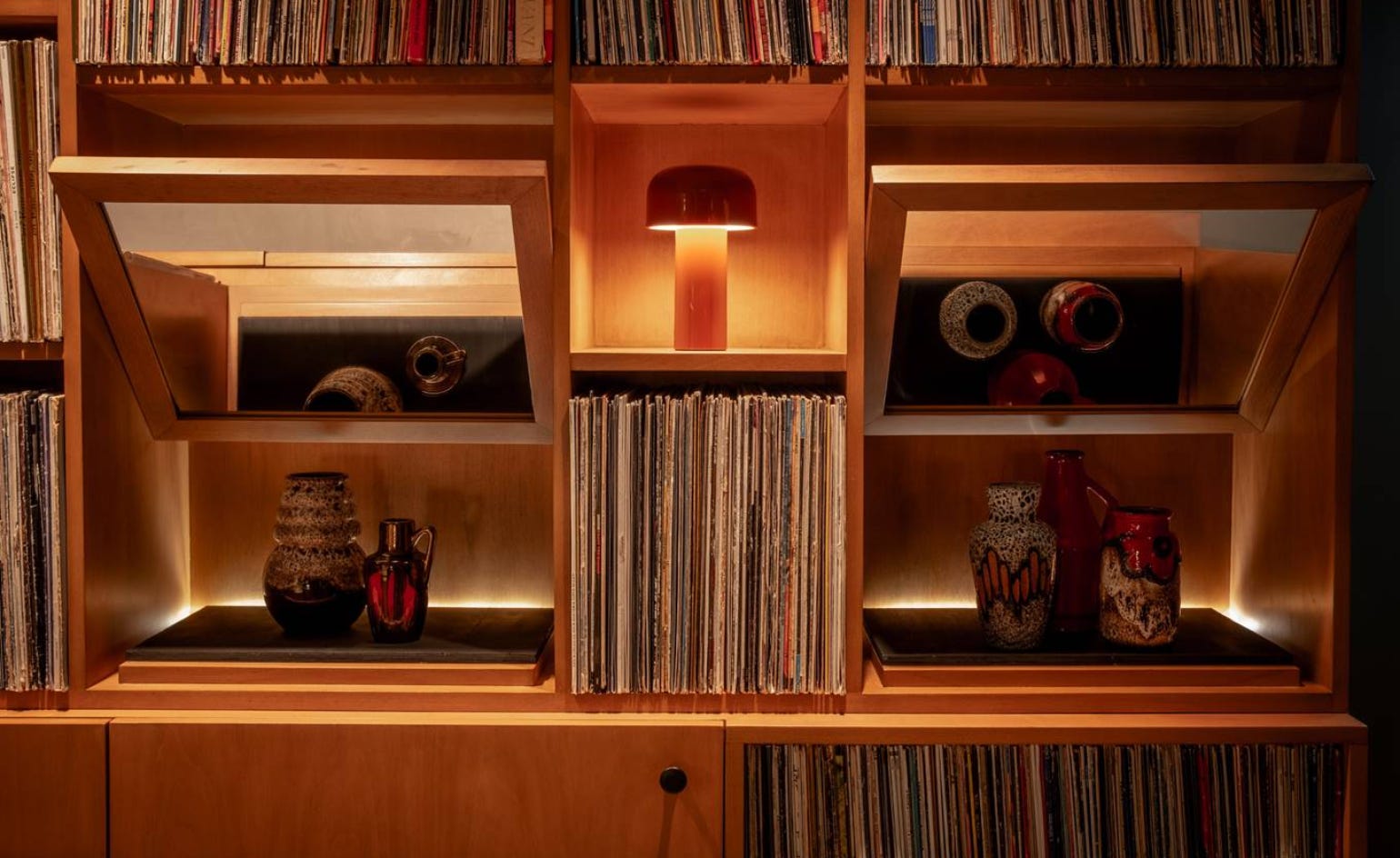
Our Body Knows a Beat
We’ve always used music to change our state: to get in the mood, out of a spiral, or into flow. The right track before a night out, the wrong one after a breakup. Emotional engineering existed long before algorithms decided what we should hear.
Science is now catching up to what instinct already knew: music doesn’t just soundtrack our lives, it can rewire them. A review of 47 studies in Health Psychology Review found that music therapy reduced stress by up to 60%. Other research shows it lowers cortisol, steadies heart rate and regulates mood. Hospitals are paying attention: patients who listen to music before surgery report about 30% less anxiety and need fewer sedatives.
A song begins, and before you even process it, your body responds. A hum under the sternum. A pulse in your fingertips. A flicker of nostalgia. The body reacts before the mind catches up. And it’s partly because low-frequency sound isn’t just heard, it’s absorbed. Vibroacoustic therapy, which uses these low tones to nudge the nervous system toward recovery, has been shown to increase heart-rate variability; a key measure of rest and resilience.
Then there are frequencies. Music tuned to 432 Hz, slightly below the Western standard 440Hz, has been shown to lower heart rate and increase calm. And some researchers suggest that music tuned to 528 Hz, often called the “love frequency”, may influence stress hormones and promote calm. Biohack or placebo, it works. If your pulse syncs to a beat mid-run or your shoulders drop mid-song, you’ve already felt it.
Lo-fi and ambient listening, once niche, have become modern coping tools. The 24/7 Lofi Hip Hop Radio channel draws tens of thousands daily. Studies link these repetitive, low-intensity rhythms to reduced anxiety and improved focus, especially in neurodivergent audiences. Researchers call it “designed calm”, sound engineered with the intention to slow down breathing and steady the mind, without demanding attention.
“Music can heal the wounds that medicine cannot touch”, wrote physician-philosopher Debasish Mridha. As science catches up, wellness is listening.
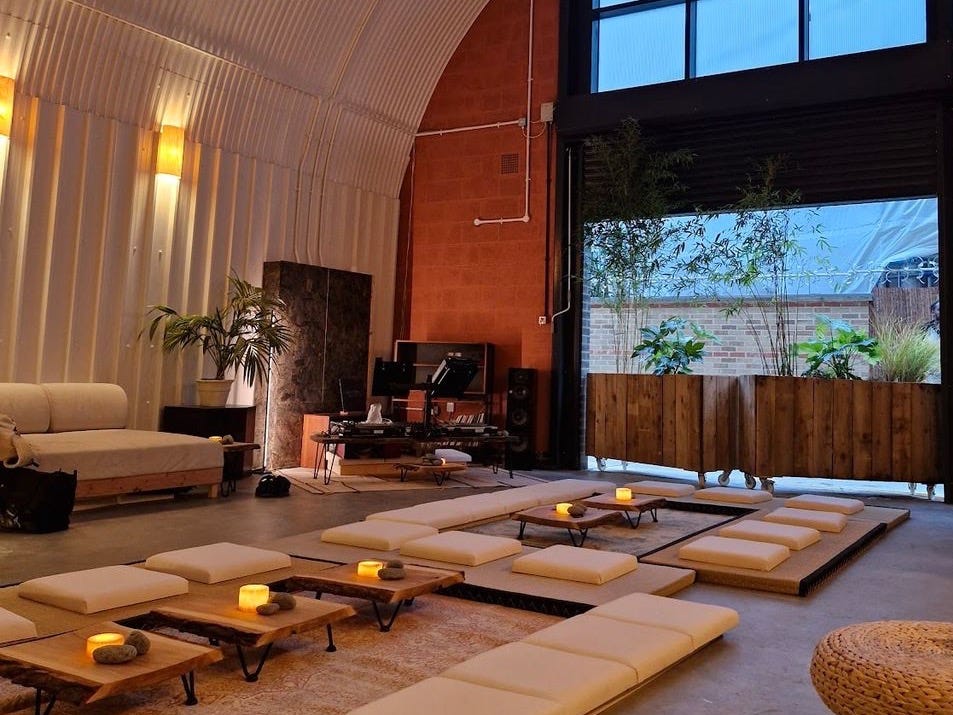
Sound Meets Wellness
In the UK and beyond, sound has evolved from backdrop to therapy, from pleasure to prescription. London, always rhythmically fluent, sits at the centre. From punk basements to gospel choirs to Notting Hill sound systems, the city has always spoken in frequencies. Today, its listening culture spans both ends of the spectrum: high-fidelity bars like Brilliant Corners and Spiritland, and studios transforming sound into recovery tools.
“Music has healing power”, said Elton John. “It has the ability to take people out of themselves for a few hours”. Today, that feels less metaphor and more model.
Ancient Frequencies
None of this began with biohacking, Lofi Girl or Apple’s “sound therapy” playlists. Sound as medicine is ancient.
Chanting “Om” in Indian practice activates the parasympathetic nervous system within minutes. In Sufi samā a.k.a “ritual listening” music was used to induce empathy and emotional regulation centuries before streaming existed. Tibetan singing bowls, now fixtures in sound baths, have been shown to reduce anxiety and shift brain-wave patterns.
Across cultures, sound has always been a form of repair. In Japan, jazz kissaten cafés built around turntables and tea remain temples of sonic devotion. Their influence echoes through London’s deep-listening spaces and New York’s Public Records, where simply sitting and listening has become its own meditation.
This isn’t a trend, it’s a return.
Full-Body Listening
Sound baths have become the go-to reset for anyone who can’t sit still to meditate. At London’s Re:Mind Studio, you lie under warm light as crystal bowls and tuned frequencies move through the room. Breath slows, the jaw unclenches, time softens. Research shows these immersive sessions reduce anxiety and improve heart-rate variability; a physiological “chill out”.
At Salt Studio, a high-concept hair salon, clients receive tuning-fork scalp work synced to vibration between glossing and toning. “It’s not just a blow-dry, it’s a rebirth”, says one stylist. In 2025, even your highlights can come with frequency calibration.
These rituals don’t feel like escape. They feel like alignment.
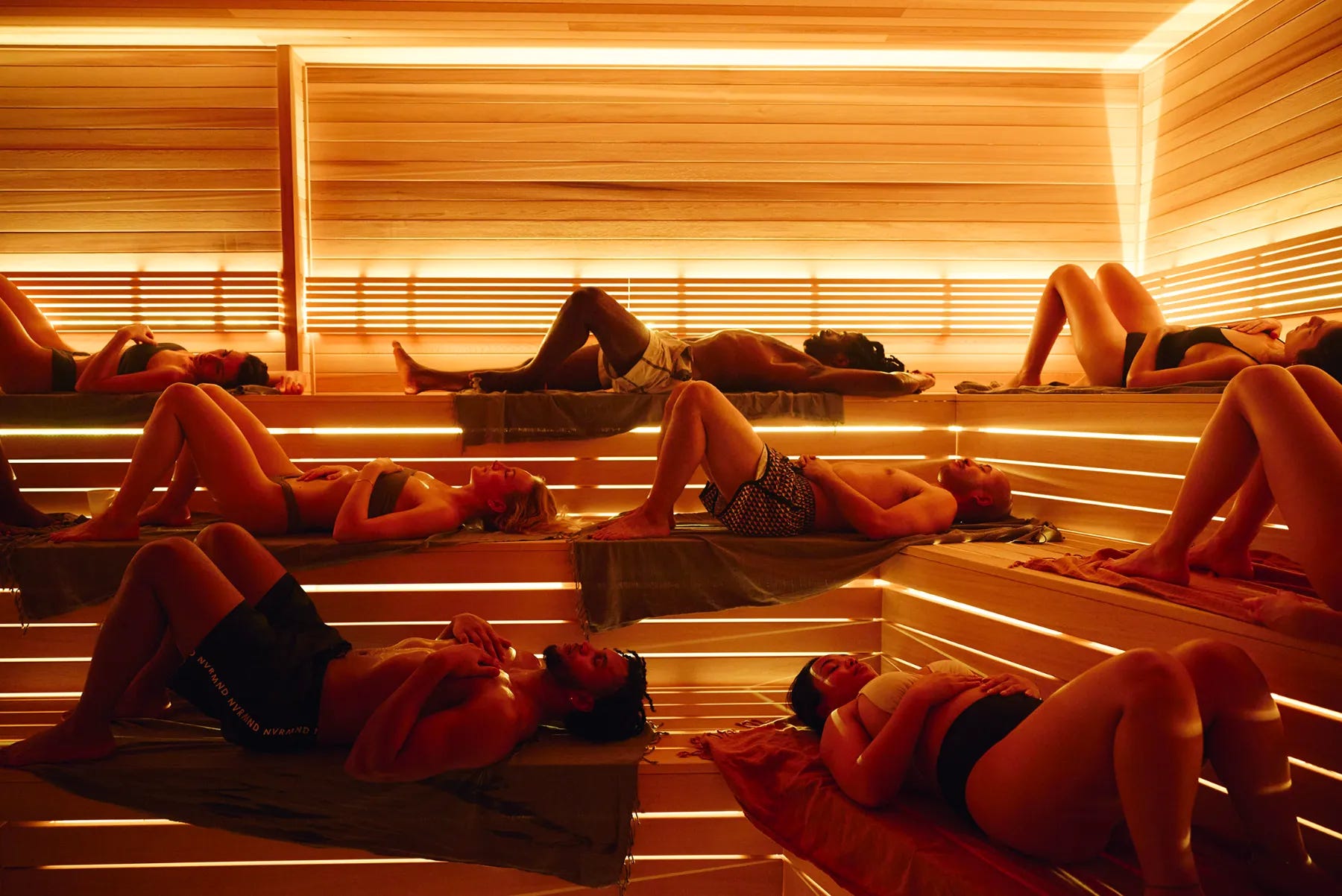
Sonic Socials
Wellness used to mean silence. Now it sometimes sounds like a sauna with a subwoofer.
Toronto’s Othership, now in New York, has turned contrast therapy into something closer to ceremony: DJ-led heat sessions, breathwork paced to tempo, and ice plunges synced to emotion rather than endurance. “Every playlist is timed to emotional peaks”, says co-founder Robbie Bent. “We’re using sound to help people feel better, together”.
London has its own version. The Sauna Social Club in Peckham reframes the sweat as a collective, high-fidelity ritual, which is part Finnish sauna, part listening bar, part art space. Low-frequency sets recalibrate both pulse and mood of the listeners. It’s more therapeutic than some therapy.
Even DJs are leaning into that responsibility. Peggy Gou and Dixon have both spoken about using tempo and frequency to guide emotion in real time, treating the dance floor as collective regulation. Closer to home, London composer and sound artist Shiva Feshareki explores similar territory, blending experimental electronic frequencies with spatial and meditative sound. Nightlife has always been a place for release. The only thing that’s changed is intention. Less chaos. More coherence.
Physical Sound
Sound has also gone tactile.
Breathpod, founded by Stuart Sandeman, merges rhythm and breath to “hack the subconscious”. Each track aligns with breathing cycles that calm the nervous system. Research shows synchronised breath and sound can improve vagal tone and emotional control.
Therabody’s TheraSound Lounger delivers full-body vibration and frequency stimulation to push the body into recovery mode. “Sound therapy can reduce stress and anxiety by directly stimulating the nervous system”, says founder Dr Jason Wersland. It’s part spa, part spaceship.
Then there’s Sensate, a palm-sized infrasonic device that activates the vagus nerve, all in the palm of your hand.
For app lovers, Endel generates adaptive sound environments that respond to your body in real time, improving focus, recovery and sleep. Think of it as a nervous-system DJ, quietly remixing your mood.
“Music is part of being human,” wrote neurologist Oliver Sacks. Which might be why this all feels less like innovation and more like remembering.
We begin in sound and should return to it. As science sharpens and culture listens closer, a new kind of care is taking shape. Trends fade, frequencies remain. They are built into us, echoing through us and it’s proof that music has always been medicine.
 | A guest post by
|
 | A guest post by
|